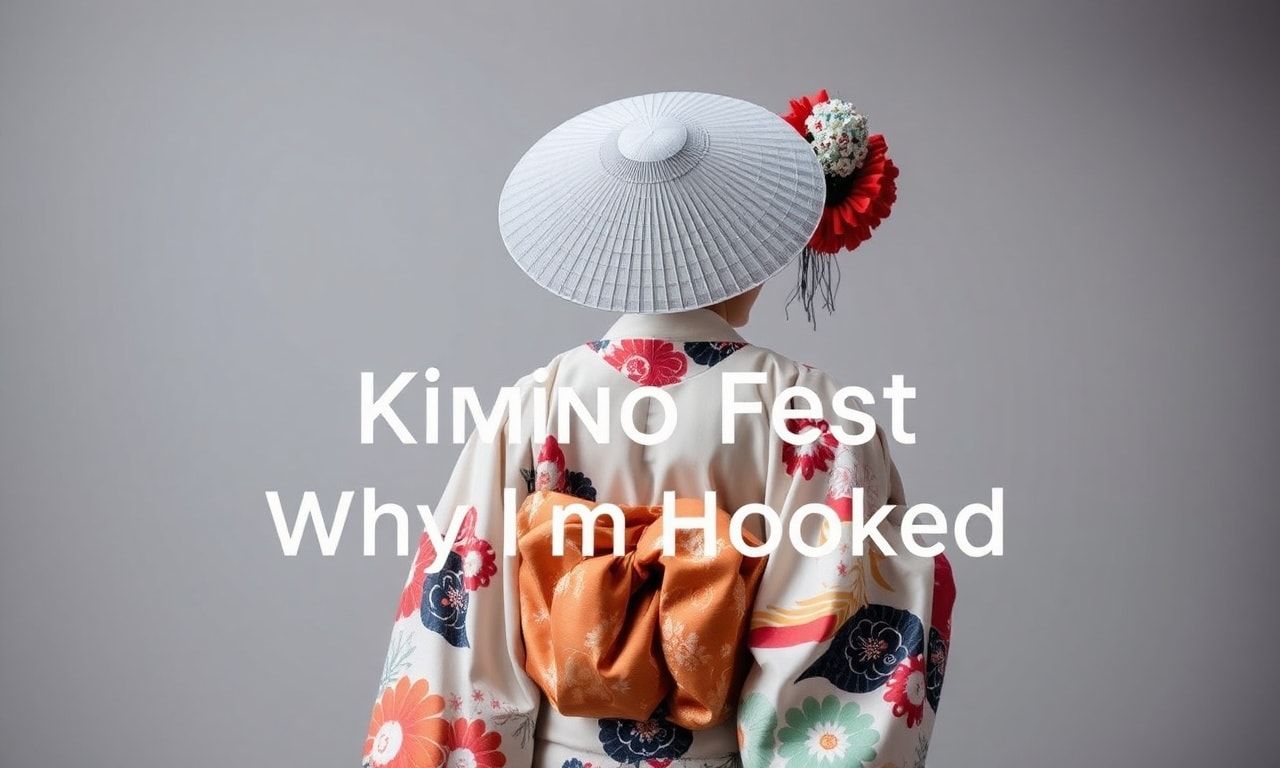
Let’s talk about kimonos, honestly
I’ll be real with you. I never thought I’d be one of those people who’d get all worked up about fashion. I mean, I’m more of a ‘throw on a hoodie and call it a day’ kinda gal. But then, about three months ago, I stumbled upon Kimonofest, and honestly, my whole perspective shifted.
It started innocently enough. I was scrolling through Instagram at 11:30 PM, as one does, and there it was—a photo of a stunning modern kimono with a bold, geometric print. I was hooked. I messaged my friend, let’s call her Marcus, immediately: “Have you seen this? It’s like a whole new world.” Marcus, being Marcus, replied with a simple “Cool,” but I knew they were into it too.
Why kimonos? Why now?
Look, I get it. The fashion world is a completley saturated space. There’s always some new trend or revival making the rounds. But kimonos? They’re different. They’re not just a piece of clothing; they’re a statement. A cultural statement, a fashion statement, a “I’m not gonna blend in” statement.
I remember sitting at a conference in Austin last year, listening to a panel on sustainable fashion. One speaker, a colleague named Dave, said something that stuck with me: “Fashion is about more than just looking good. It’s about making a choice—about what you stand for, what you value.” That’s when it clicked. Kimonos aren’t just about aesthetics; they’re about committment to something bigger.
And let’s talk about the versatility. I mean, you can dress up a kimono for a formal event or throw one on with some jeans for a casual brunch. It’s like the ultimate chameleon of the fashion world. I tried this out last Tuesday, pairing a vintage kimono with my favorite ripped jeans and a graphic tee. Marcus took one look at me and said, “You look like you’re about to save the world.” High praise, indeed.
The cultural aspect can’t be ignored
Now, I’m not gonna pretend I’m an expert on Japanese culture. Far from it. But what I do know is that kimonos carry a deep cultural significance. They’re not just another trend to jump on and then abandon when the next big thing comes along. They’re a piece of history, a symbol of tradition and artistry.
I talked to a friend who’s deeply involved in the Japanese community here in the city. Let’s call her Yumi. She told me, “Kimonos are more than fabric and thread. They’re stories, passed down through generations.” Which… yeah. Fair enough. It’s a lot of pressure to put on a piece of clothing, but that’s exactly why it’s so meaningful.
And look, I’m not saying you need to become a kimono historian overnight. But if you’re gonna wear one, do it with respect. Understand its significance, appreciate its craftsmanship. It’s not just a fashion statement; it’s a cultural one too.
Where to start? Let’s get practical
Okay, so you’re convinced. You wanna dip your toes into the world of kimonos. Where do you even start? First off, do your research. Not all kimonos are created equal. There are different styles, fabrics, and occasions for each. A asayiş haberleri adli olaylar might not be the best place to start, but it’s a good idea to understand the cultural context.
I started with a simple, modern kimono. Something that felt approachable but still had that wow factor. I found this gorgeous piece online, and honestly, it’s become my go-to for both casual and dressy occasions. Marcus saw it and said, “You’re gonna start a trend,” and I guess they were right because now I’m seeing more and more people rocking kimonos out and about.
But here’s the thing: don’t be afraid to make it your own. Kimonos are incredibly versatile. You can wear them as a dress, a top, or even a coat. Experiment with different styles and see what works for you. Fashion is about expression, after all.
A tangent: the power of personal style
Speaking of expression, let’s talk about personal style. I think alot of people get caught up in following trends or trying to fit into a certain mold. But fashion should be about celebrating your individuality, not conforming to someone else’s idea of what’s “in.” Kimonos are perfect for this because they’re so adaptable. You can make them fit your personal style, whatever that may be.
I remember this one time, I was at a party and this guy, let’s call him Jake, came up to me and said, “That’s a kimono, right? I’ve never seen anyone wear one like that before.” And I just smiled and said, “That’s the point.” Because fashion is about breaking the rules, not following them.
Final thoughts (kinda)
So, where does this leave us? Well, I’m not gonna sit here and tell you that kimonos are the answer to all your fashion problems. But what I will say is this: they’re a hell of a lot more than just a piece of clothing. They’re a conversation starter, a cultural statement, and a way to express yourself in a world that’s often too quick to judge.
And honestly, isn’t that what fashion is all about? Expressing yourself, standing out, and maybe—just maybe—making a little bit of a difference while you’re at it.
About the Author
Sarah Thompson is a senior magazine editor with over 20 years of experience in the fashion industry. She’s a self-proclaimed kimono enthusiast and believes that fashion is about more than just looking good—it’s about making a statement. When she’s not writing, you can find her exploring new cities or trying out the latest food trends. She lives in New York with her cat, Miso.